BLOG
A Mountain, a Garden and What Holds Them Together – June 2026
Imo Simmonds
Not long ago, on a scorching May weekend, I climbed Yr Wyddfa (Snowdon) with friends to raise funds for Edible Landscapes London.
I love plants, growing, foraging and generally disappearing into nature whenever possible, but ELL holds a particularly special place in my heart. During lockdown, the garden became somewhere I felt grounded at a time when the world felt anything but. It was somewhere I could sink my hands into the soil, feel connected and remember there was still a world beyond the walls of my flat. Later, it became the site of my Master’s fieldwork, helping shape how I think about food, community and our relationship with the landscapes we inhabit.
Lots of people have their own version of this story. Through its education programmes, ELL helps people of all ages develop practical skills, confidence and a deeper connection to the natural world.
Yet, like many grassroots organisations, it faces an increasingly challenging funding environment. Grants are more competitive, costs are rising and resources are stretched.
In my day job as a community fundraiser, I spend a lot of time thinking about what makes organisations and communities resilient. The same question arises again and again: how do we sustain the projects that matter to us?
So, when the opportunity arose to raise money for the garden, I wanted to practise what I preach.
As we set off up the Ranger Path, cloud drifted through the valleys in silver ribbons, the peaks coming in and out of focus behind curtains of mist. The air smelled earthy and green. As we gained height, the views shifted from the picturesque to the sublime – vast ridges and wreathed peaks.
As we neared the summit, the sun broke through the clouds and I noticed the other people who had climbed the mountain. There were families, children darting ahead as their adults strode along behind. Seasoned hikers and trail runners in full kit charged by with an impressive ease. Larger groups sprawled across the heather for photographs. Solo walkers relished the luxury of a day alone with their thoughts. For a few hours, all these lives met on a winding path in the hills.
It reminded me of Tim Ingold’s concept of the “meshwork” – a web of relationships created through movement, interaction and shared experience. Communities aren’t static; they’re animated through the countless threads that connect us.
That’s what this fundraiser felt like – a community. Friends chucking me a tenner. Family members donating without pause. People I hadn’t spoken to in years resurfacing after liking an Instagram post. ELL volunteers sharing my fundraising page with their own networks. These small actions became something much bigger. Together, they formed the web of support that made raising £1,575 possible.
In many ways, this mirrors the principles that underpin forest gardens and permaculture. A thriving forest garden is resilient because of a web of relationships, with different plants supporting one another in visible and invisible ways. Some attract pollinators, others build soil, provide shelter or suppress weeds, but each plays its role in helping the system flourish.
Increasingly, community projects must reflect this approach with their funding. One person donates. Another fundraises. A local business sponsors an event. Someone attends a workshop. Someone else tells a friend. Each contribution becomes another thread in the meshwork. Forest gardens survive through diversity, interdependence and many small contributions over time.
My Snowdon fundraiser was one small strand in that wider web. A huge thank you to everyone who supported my challenge. I’d encourage you to consider what role you might play. When we work together, remarkable things can grow.



Global Roots, Local Colour – April 2026
Anne Barwick
I’m setting up a low key community project based at the ELL dye garden to explore sources of natural colour in the landscape and gardens around Finsbury Park, and to use them to make a piece of textile art that celebrates local plant and human diversity and creativity.
I will be at ELL regularly every month on a Sunday, either focusing on a particular dye plant, or going out foraging; looking at the origins of the plants, how they grow and how to use them for dyeing.
The growing will lead to dyeing and as the seasons progress there will be sewing and quilting, either in the garden or somewhere warm nearby.
You’re welcome to come along and join in, I’ll post dates on Substack and on our What’s App group for volunteers. There’s no cost other than your time and energy.
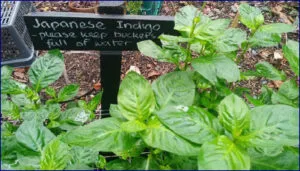
This Sunday (April 19th, 10 – 12) I’ll be focusing on blues, sowing Japanese Indigo in a semi-hydroponic system and mulching the woad. In May, mostly likely on the 24th, I’ll be planting out some annuals for yellow dye. There might be some foraging in June, depending on the weather and what grows, or possibly setting up some solar dye jars.
If you want to keep up with what’s happening in the Dye Garden my Substack is here:
Anne Barwick
Wassail and Welcome – February 2026
Edible Landscapes London
OUR FIRST WASSAIL
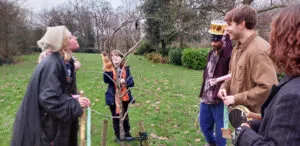
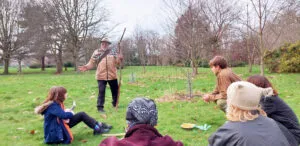
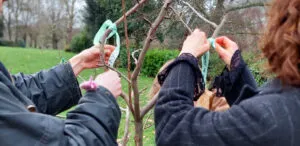
On Sunday 8th February, Edible Landscapes celebrated our first ever Wassail.
For those unfamiliar with Wassails, it is an annual tradition of blessing orchards to ensure good harvests for the year to come.
As it was our first, we took a creative approach. Blending tradition with contemporary expression, following our own desire paths, and finding our own way of doing it that makes sense for us.
We sang songs old and new. One lucky Asian pear tree even received a full-throated rendition of a Robbie Williams classic! Though, as this tree is only a couple of years old, it may not have experienced the full nostalgia hit that the singers got.
WARM WELCOME TO OUR NEW DIRECTORS
We are celebrating new crew! We’re delighted to welcome the energy, expertise and good vibes from our new friends, and looking forward to working closely together, to steer Edible Landscapes to a fruitful future.
Oysters of the Forest – January 2026
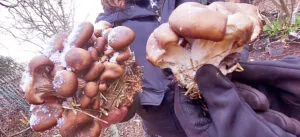
Warm welcome to a new year! We are back at the site, embracing the snowy start to 2026, with re-energised roots. All are welcome to come by and raise a hot cup of tea with us. Despite a frozen pond, we are celebrating our very first oyster mushroom bed harvest. These beauties are born from our fungi cultivation workshop in October. A huge thank you to all who lent a hand in building this bed, and to Lotta from the London Mycology Project for sharing your knowledge. Watch this space for more to come! We have plenty of new events in the brew…
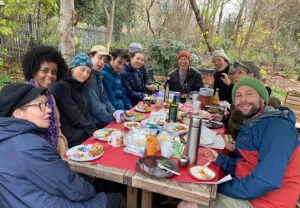
Festive Gathering – December 2025
Fungi Adventures – November 2025
This month we welcomed the London Mycology Project to the garden, and they’ve helped us set up a patch of the garden specially for growing oyster mushrooms. But they’re not alone… We’ve had all sorts of other beautiful varieties of fungus come into the garden this month. Can you identify any of them?
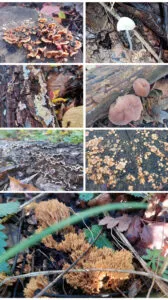
If you are stuck and want a clue, just come to the garden on a Tuesday, or drop us a line!
Jam and Colours – October 2025
A bumper medlar harvest! There ended up being more than we could eat (but we definitely tried)! Various members of the community bletted theirs and made them into jam – which inevitably led to a taste-test. The jury’s out, some preferred coconut sugar, others liked it with cinnamon and lime. The only thing we could agree on was that medlars do indeed taste great!

Home made jam from the forest garden’s medlar tree
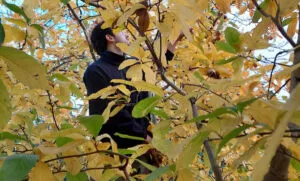
Picking medlar fruit at the forest garden
Community Permaculture Celebration – September 2025
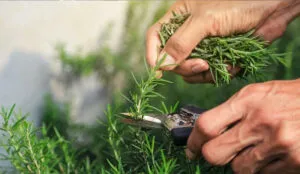
End of Summer Forest Garden Jobs- September 2025
The season of fiery forest colours and abundant fruit harvests has arrived! A time for listening to the plants – asking what does the garden need in readiness for winter? In this post we’ll share tips to keep the garden healthy, and how to give something back to the wild inhabitants.
Prune lavender – one of our favourite bee friendly plants. Once the last glorious flush of flowers has faded, use sharp secateurs to cut back stems just above the lower sets of leaves. This will ensure a healthy plant full of blooms next year. Careful not to cut into the woody branches, as lavender will not regrow from here. If you miss this early Autumn window, dont worry, it can wait until spring. Avoid pruning too late in Autumn, as new growth needs time to harden off before the first frosts.
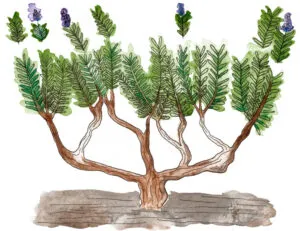
Lavender – After flowering, remove up to one third of the green branches, leaving the brown woody branches. Illustration by Kiva-Marie
Plant garlic and allium bulbs – In autumn we love to plant bulbs of garlic, and ramsons, which do well with a spell of cold weather over winter. For more unusual alliums, we go for Babington’s leek. These perennials will multiply reliably for future harvests, and bloom abundantly for pollinators in spring.
Take semi-ripe cuttings – Why do we take these cuttings in early Autumn? At this time, hormone levels are high, encouraging roots to form quickly before winter sets in. Tender plant cuttings are then easy to overwinter in a sheltered spot, by placing them inside a greenhouse or cold frame, under glass. Plants suitable for semi-ripe cuttings include passion flower, fuchsia, salvia, verbena, jasmine, rose, alongside woody herbs such as rosemary, sage, bay and thyme.
Cut away diseased foliage – This is a crucial step in halting any disease life cycle, and assist struggling plants. Once identified, cut away and dispose of any diseased material carefully, including dropped leaves. Remember not to add these to compost. This is all done before the cold weather sets in, to give any cuts a better chance to heal. Clean secateurs and tools well with white spirit or alcohol.
Build habitats – Place small, out-of-the-way piles of leaves or brash, in corners of the garden. Any material not added to compost, can be chopped and stacked under shrubs, as habitat for toads, frogs, hedgehogs, birds and insects. Leave some flower stems standing – hollow stems provide excellent overwintering shelter for insects, and seed heads will benefit birds and animals as sources of winter food.
Keep roots and soil protected – Ensure plenty of mulch around fruit trees, and living ground cover throughout your forest garden, ready for winter weather. Top dress earth with organic material and compost to re-nourish depleted soil. You can chop and drop excess foliage from plants like comfrey, or perennial legumes, after their abundant summer growth. If you have a no-dig bed for annuals within your forest garden, you may wish to revitalise the soil life by sowing green manures over autumn. You can chop and drop these for mulch in spring, allowing some to flower for the bees, such as phacelia and clover.
Summer Events in the Garden – July 2025
We are feeling grateful for all the fruit that’s coming through at the garden and in the orchard. Raspberries, tayberries, mulberries, medlar, japanese wineberry, apples, pears… The list goes on!
There are lots of exciting workshops, courses and family days coming up at ELL over the Summer. All kept at free or low cost prices to try and keep things accessible for everyone. See below for more information on our list of workshops, courses and family days. To find out more details on each event and to register visit our Events page.
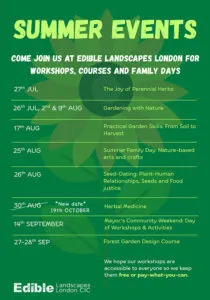
Update on Forest Explorers :
Our Forest Explorer Sessions for Toddlers will continue every Wednesday over the Summer. Please note that we have changed the timings of the sessions to run from 10am-1pm.
Aurora will be our new Forest Explorer Facilitator, leading these sessions from the end of July. Aurora has tons of experience in Forest Schools, including running her own Forest School, and we can’t wait to welcome her to the garden and to these sessions!
Colourful Blooms and Activities – June 2025
It’s a beautiful time to be in the garden. As we shift from spring into summer, the forest garden is entering one of its most abundant times of the year. The soft greens of spring are giving way to the fullness of early summer, and with it comes an explosion of growth, colour and wildlife activity.
We’ve been busy propagating plants like saltbush, violets, and lemon balm. The comfrey is flowering in full force – the bees are be loving this! While redcurrants and raspberries are ripening in the sun. We’re also brewing a comfrey and green alkanet compost feed to give our plants a boost. The area around the pond is coming to life with many plants coming up, including lots of horse radish. We’ve planted a number of native pond plants such as yellow flag iris, marsh marigold, and meadow sweet. A new bench has been built by the pond – a perfect shady spot to relax and watch the vibrant pond-life.
Upcoming workshops and events:
- Introduction to Permaculture workshop – 28th June (Friday)
Led by the inspiring Rakesh, this full-day workshop introduces the principles and practice of permaculture and regenerative design tools for everyday life. - Gardening with Nature course – 26th Jul, 2nd Aug, 9th Aug. A hands-on, 3-day course in sustainable gardening at ELL. Suitable for beginners and more experienced gardeners.
- Sunday Site Leaders Training – 22nd June (Sunday) Are you a regular volunteer at ELL and want to get more involved? This hands-on training helps volunteers feel confident to help run Sunday sessions.
Blooms : Achillea ‘Walther funcke’, is one of the colourful varieties of yarrow we have selected for the garden this month. Perfect for birds and pollinators. Yarrow has long been valued for medicinal benefits, including the potential to improve digestion, reduce inflammation, and wound healing. A drought-resistant, firey variety, Walther funke will bring vibrant flowers to brighten grey cityscapes over many months.
SETH – May 2025
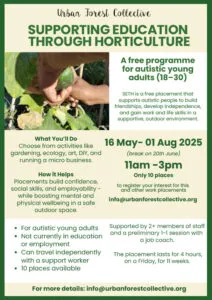
We are excited to announce that in May 2025, Finsbury Park will be home to a new scheme to support young people with autism into employment and education through horticulture – SETH.
In a unique partnership between Urban Forest Collective and Edible Landscapes London, we are able to offer 10 places, starting 16 May and running until 7 November 2025. These lively sessions will take place one day per week, for 4 hours per day, over cohorts of 12 weeks each. Sessions are aimed at NEET (Not in Education, Employment, or Training) autistic young people aged 18–30, who are able to travel independently or with a support worker. The project will run for 24 weeks in all, over two 12 week sessions.
Activities include:
- Gardening: Plant propagation, including safe tool use, and DIY projects
- Social & Business Skills: Contribute to a micro-enterprise by selling plants and seeds, marketing
- Wider Skill Development: Teamwork, financial literacy and budgeting
- Nature Connection: Develop skills in conservation and forest gardening within an urban context
Would you, or someone you know, like to take part? We’d love to hear from you! For more information contact info@urbanforestcollective.org
Forest Story – April 2025
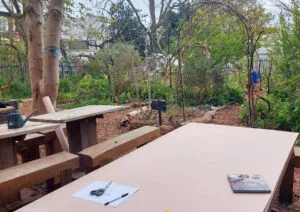
Today we were blessed with a multi-sensory story co-creation workshop in the garden, hosted by one of our talented project coordinators Alex Gomar, and Reallynice, a collective of play based artists. Loads of wonderful stories were made. We discovered the crocodile that lived in the pond (without going too close!). We took some unexpected explorations, and dove into nature of the garden.
On this journey, participants were invited to create mythical narratives both individually, and in a group collaboration. We were introduced to beautiful practices from embodied performance techniques, distilling our collective experience into relaxed storytelling. One of the young people said his favourite thing was that ‘I was able to make a story in my own way’.
We will be looking forward to more creative adventures! If you are interested, please do get in touch or contact Reallynice to find out more.
ART’s Dartington Forest Garden in Devon – March 2025
Support the Dartington Forest Garden
Our friends at Dartington Forest Garden in Devon, managed by the Agroforestry Research Trust (ART), placed a call out for support this month, after being issued with a notice of eviction. This pioneering two-acre garden is often described as the ‘best example of a forest garden in temperate climate zones’. As it has grown, the garden has inspired thousands of students, gardens and projects around the world, including our own garden in Finsbury Park. The garden is not only a joy for those who visit, but a home to wildlife, and a host to scientific research on carbon storage, and innovative methods of growing food and materials regeneratively.
*UPDATE 26th March : Thank you to all who have taken action! After an overwhelming surge of public support, there has been progress. DHT now agree to continue the lease until the contract ends, in three years time, and are in dialogue with ART. However DHT are not yet offering to sell the land. ART continues to welcome public support to ensure protection and stewardship of the forest garden into the future. You can get in touch with ART directly on the campaign page here.
Transition Towns – February 2025
Do you want to get more involved in local green initiatives?
- Do you want to support or implement practical projects around food, energy, waste, transport and nature in our community?
- Want to help address social injustices and decolonise our lives?
- Do you want to be part of a growing international movement of connected local communities creating change?
The Transition Towns Network is a global movement. It focuses on creating sustainable, resilient communities. Local initiatives Transition Finsbury Park and Crouch End are now launching a series of meetings and events to find new ways to work together, enhance networks, and garner fresh ideas for change. You are warmly welcome to join us at our upcoming film night, taking place at the Roundhouse, Meadow Orchard Project N8 8JD, on the 23rd March 6-9:30pm.

Winter Solstice Celebrations and Willow – December 2024
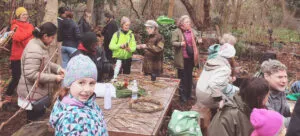
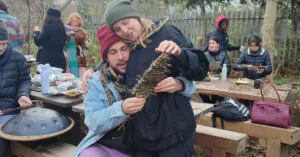
Wishing all a colourful Solstice! We enjoyed a vibrant celebration here at the forest garden. A mix of many new faces and familiar friends. It was enlivening to see strangers bonding over the weaving, and exchange teachings with each other. Willow wreaths, crafts, feasting, alongside musical instruments such as guitars and drums.
We are very grateful for the many volunteers who have given their energy and time over the past year. The project has grown into a welcoming and treasured space to connect together with our wild family. We are thankful to spend this time in the regenerative rhythms of the winter season, and restful plants.
The garden will reopen on the 14th January, and together we will brew a cup to a new year!
Pond build at ELL – November 2024
‘If there is magic on this planet, it is contained in water’
-Loren Eiseley
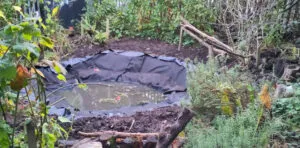
Work on the new pond has officially begun. It is very exciting. This November and December we are rebuilding and replanting our wildlife pond. We are encouraging everyone who wishes to learn to join us. Also to rewild back gardens, and communal spaces. Simply, the more ponds we have, the more life we have.
Please bring your boots. It will be wonderfully muddy. For our more than human family, the new pond will provide a wider range of habitats, for the likes of newts, toads, hedgehogs, bats, insects, birds and all the small mammals that reside in the park. There will also be some carpentry work. So far progress has been steady, including a simple design stage, some survey work and consultation. We removed the old liner, and transferred the current inhabitants to a temporary holding pond. Then started to redig, reshape, tamper in the earth to create a sturdy form. We added the new liner with sturdy underlay. There is more to come.
A pond is the beating heart of a garden. By learning and sharing how to create a water area in the garden, not only do we make the growing systems more efficient, we create a peaceful healing space. We can put back into the landscape what would naturally occur without human development.
If you’d like to get involved, we’d love to have you. If you would like to build your own mini pond, let’s swap inspiration and stories. Or ideas for building a larger pond. What different plants and oxygenators should we include? What materials work best.
While we are very thankful to have received funding for this work from the Bupa Foundation’s Green Community Grant, it is important to remember there are ways it can be done with little or no money at all!
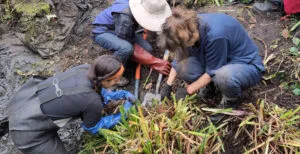
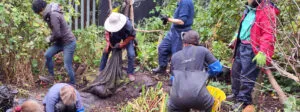

Volunteers and crew getting submerged in pond joy at the forest garden
Let’s Create Habitat for Wild Bees – October 2024
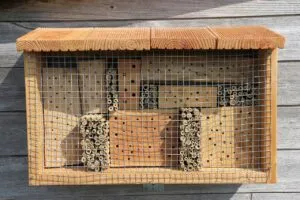
An excellent example of human-made bee habitat, designed for wild cavity nesting bees, such as mason, leafcutter and carder. Photo credit John Little
We’ve devoted this October post to wild bees and their habitat. Did you know that there are over 250 species of bee in the UK? All beautifully diverse in their habits and appearances. 24 species of bumble bee, one honey bee (introduced by humans), while over 90% of our bee species are solitary bees. Each nest is the work of a single female. Learning of their vibrant lifecycles helps us to design better habitat. In fact adults solitary bees only live for around 4 – 6 weeks, a short time. They lay eggs into nests in the warmer months, then fill these nests with nectar and pollen. These eggs hatch into larvae, transform into pupae, and overwinter inside the nests, finally emerging as adults the following spring. These bees play a vital role within our ecosystems.
So, why do wild bees and insects need to be protected? Insect populations underpin the health of our ecosystems, however populations have rapidly declined. Natural England (2011) estimated that between 1930 and 1983, 97% of wildflower meadows in England and Wales were lost. The UK has become one of the most nature-depleted countries in the world, ranked in the bottom 10%. Flying insect populations have declined by as much as 60% in the last 20 years, according to one study. Maintaining healthy insect populations has never been more important. As populations decline, so do species of mammals, birds, amphibians, flowering plants. By helping insects and pollinators, we help the web of life. Wild bees are innately ‘friendly’ to humans. They are peaceful, less likely to sting than honeybees.
Top tips to build wild bee habitat:
1. Include a healthy food source and water source. Plenty of pollinator friendly flowers. Native flowers are around four times more likely to attract pollinators. Drought-tolerant perennials like lavender are ideal. You can onclude flowers fornight-time pollinators and winter flying species. Consider not mowing the grass until the second half of June or after the flowers have bloomed. Forget the pesticides and chemicals. Placing out a dish of water with rocks, for bees to land on and drink.
2. Build excellent physical habitats for solitary bee nests. There are different types of wild bee, which enjoy different habitats.
- Cavity Nesting Bees nest in material raised above the ground. Many of these species would enjoy a sheltered, sunlit space, with tunnel shaped chambers, created from wood and bamboo. (See photo above.) These homes do not have to be large. Smaller sizes are easier to create, clean and look after. The holes should be south facing to receive plenty of light in the morning. A roof with overhang to keep out the rain and mould in winter is vital. To create one, use lengths of bamboo, or create holes in solid, clean, untreated wood. Drill different size tunnels, depth 9 – 15 cm, diameters 2 – 10mm. Holes should be smooth, no rough edges to tear fragile wings. Angled very slightly so water does not collect inside. Ensure there is a solid back, so no draughts. Regular maintenance is helpful, keep an eye out for any parasitic species that may move in.
- Mining Bees are generally ground nesting bees. Though many can live happily in sandy ‘green roof’ habitat, which mimics the ground. Simply leave an area of bare earth, covered in sand, aggregate or clay mix, in the garden. This could be in the form of a sandy rockery or succulent area, with areas of sandy soil. You can even build a specific habitat structure in your garden or balcony. For flowering succulents, we recommend delosperma, rock rose and hylotelephium. Flowering herbs such as wild marjoram, wild basil, lavender, campanula rotundifolia, wild clary sage and wild thyme. Different bees prefer different substrates, why not try a few. A wopping 70% of bees are ground nesting, wordwide.
Find inspiration: We recommend checking out other gardens and designs. We recently visited John Little’s garden in Essex. John shares a wealth of knowledge around habitat for invertebrates on videos, and hosts regular tour visits. By actively creating bee habitat in our gardens, we send a clear message to all who pass by. Please share with us your journey!
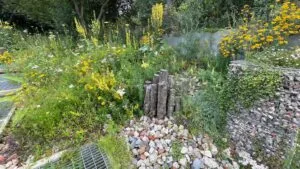
John Little’s garden in Hilldrop, Essex, brimming full of the physical nooks and niches that biodiverse wildlife depends on. The areas of earth, aggregate and sand piles found here are perfect for ground nesting bees. The site includes numerous ponds and scrapes to provide both water and muddy habitats. Photo credit John Little
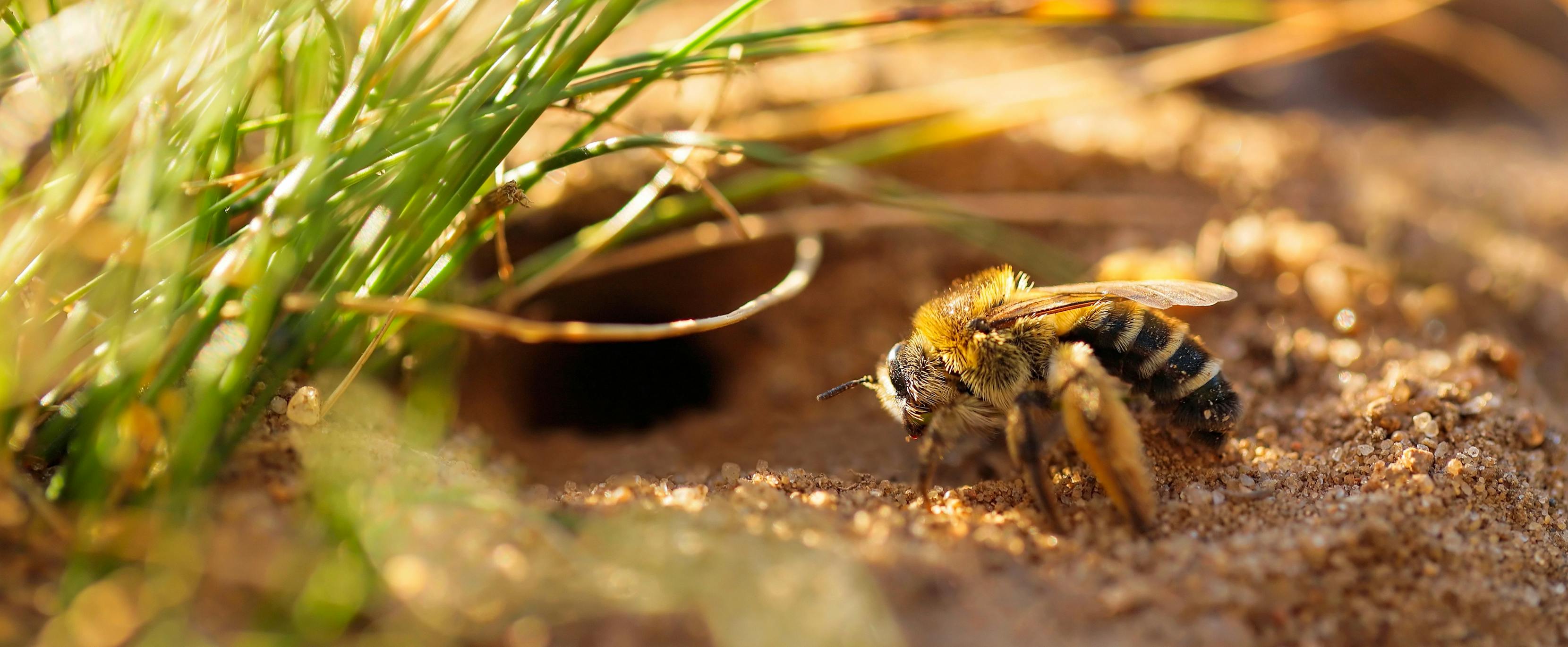
Pantaloon bees can be found on sunny sandbanks in these gardens. A favourite food source is chicory flowers. Photo credit John Little
Forest Gardening with Rakesh – August & September 2024
In late August, we were honoured to be joined by inspiring permaculture teacher, Rakesh Rootsman Rak.
Rakesh came to the garden to share with students what he had learned from a wide range of temperate forest gardens internationally. Also with a range of interests and backgrounds as an eco village and Transition Together advocate, and sociocracy community builder, among other things.
Participants on the course were invited on an insightful learning journey over two weekends. The experience was filled with engaging and informative conversation, which led us down channels which challenged us, opened hearts and minds to new ways of practice. Tools were offered towards holistic approaches. Regenerative visions of our cultures and communities.
The first day commenced with a short history of forest gardens. This acknowledged indigenous origins, in a more balanced way than the typical western perspective you might expect to read in a text book. We met the beings living in our rich soil life. Delved into processes of natural woodland succession, which helped us to understand why landscapes unfold as they do. This helped give insights on how to heal the land and work with nature. Tips shared on nutrient cycling, how to select plants, and water management. On the second weekend we worked as a collective, to design a publicly accessible forest garden outside the gates of the site. This design reached into the recently planted orchard area. While currently theoretical, this winter we have permission to expand the park’s orchard area with 6 new fruit trees, working with the Orchard Project and Haringey Parks Team.
As communities these conversations are vital and empowering. An invitation to reimagine our parks and communal spaces, with new forest gardens and flowering perennials providing habitat and food for all species.
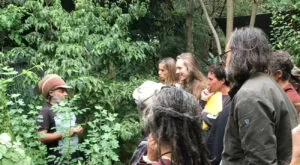
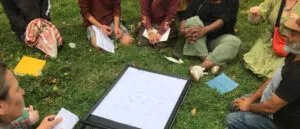
Rakesh with new Forest Garden students in Finsbury Park
Summer Celebration in the Forest Garden – July 2024
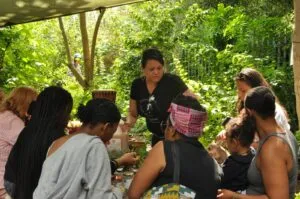
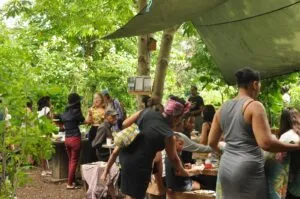
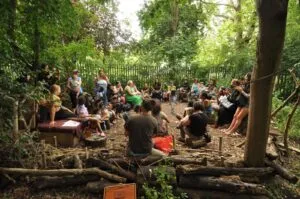
Gratitude to all who helped us to sing and drum in the Summer Harvest, during our recent family day celebration in the forest garden. Together we created fresh plant acetic tinctures with foraged herbs, such as artemisia, with Clapton Botanica. We painted the nature around us, and gave birth to a colourful banner using the technique of Hape Zome, with Quilt Club. Participants propagated and met many of the garden’s more unusual plants. Creative conversations naturally arose around food sovereignty, while we foraged a salad feast in the garden.
Finally, a crescendo of singing and drumming in the Summer Harvest! Sharing our appreciation for the abundant life all around us.
Wild City – June 2024
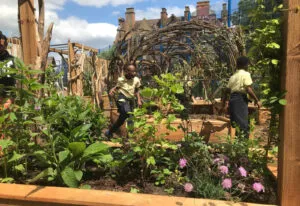
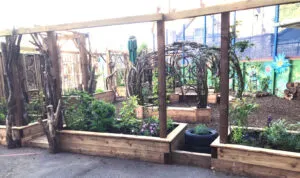
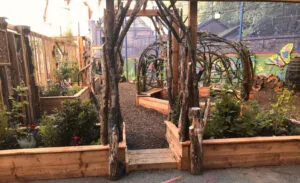
Congratulations to students and staff at Morningside Primary! Wild City Project has come again, and this school has now received the final prize, in the form of a finished forest garden build. We felt very blessed to work with these talented young designers. Together we manifested a beautiful forest garden from scratch, at their playground in Hackney.
Hearty congratulations goes to all six of the finalist schools who joined us on the journey. Each of the six garden designs entered for the prize represents a unique collective vision; an interpretation of what it means to create bountiful habitat for wildlife and people.
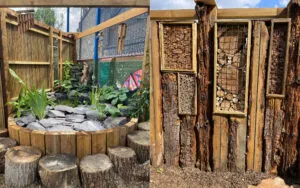
A particular challenge for our team this year came in transforming a virtually lifeless area of hard playground, to an interconnected and well rooted forest garden. Where there was once only astroturf and asphalt, we dug out the space under the many new beds and ensure there was good soil. Above ground we created a group of colourful forest garden beds containing nine trees and guilds, as well as a raised pond, seating area, insect towers, rainwater harvesting, archways and natural artwork to complement the murals created by the students. Whilst below ground, underneath the mulch laid down, the new rootsystems of the plants fully connected to the groundwater, earth, and to each other. Nutrient channels were able to flow in mycelial superhighways to areas where they were needed most, through the natural mycorrhizal networks.
Forest Explorers – April 2024
Come and join us at ELL’s Forest Explorer sessions run by me, Foz on Wednesdays from 10 to 12pm.
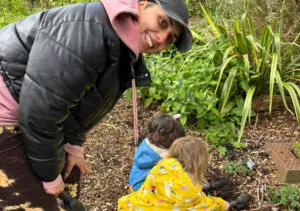
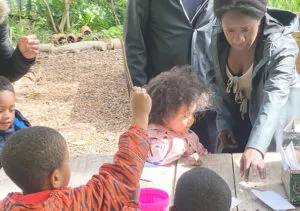
The sessions are FREE and the garden space is here for young children to explore and be wild in nature. We host fun and educational activities such as seed ball making, exploring, planting, propagating, meeting with creepy crawlies, creating mud art, making tea with herbs and learning through touch, taste, feel and imagination.
Sessions are for young ones up to 3, home ed kids and siblings are welcome. We look forward to exploring nature with you soon!
Call Out for Budding Forest Gardeners – March 2024
Love is Action!
Are you interested in gaining practical experience in creating permaculture gardens, or skills in forest garden design? Here is your opportunity. We are embarking on another blossoming year of creating the Wild City Project in partnership with The Salters Institute. Each year our outreach team works with North London Primary schools, in an immersive learning adventure, focussed on Forest Gardening. The first part of the project takes place during the winter months, when our education team works closely with the children and staff, with interactive outdoor games and learning resources. The children from these schools go on to create designs for their own Forest Gardens. The winning design is announced at the end of March. These colourful designs always astound us with their imagination, and include elements with a focus around permaculture, building biodiversity, and honouring wildlife.
With students, we will be planting the new forest garden during April and May. Co-creating a new nature sanctuary space, to be enjoyed as it grows, by hundreds and thousands of young people. ‘A vibrant, humming outdoor classroom, that literally blooms into life.’
To get involved, no experience is necessary. We are interested to hear from people from a variety of diverse backgrounds, who are interested in learning about forest gardening. This training will provide you with transferrable skills, and can lead to paid work. If you would like to be involved in some aspect of the garden design or build process, and can supply a full DBS, then please do get in touch! We would love to hear from you.
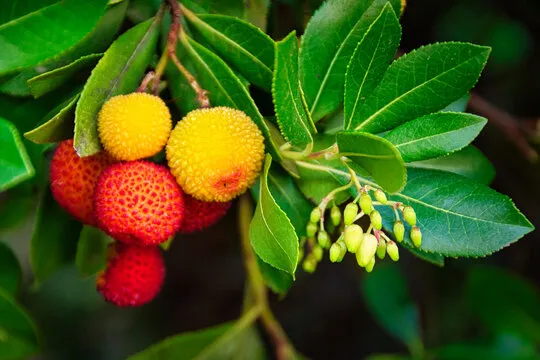
The drought resistant and ususual, Arbidus unedo, or ‘strawberry tree’
Peaceful and Powerful Climate Actions – February 2024
An inspiring week of global climate actions will take place from February 26th, involving a wide coalition of groups, and organised by Insure Our Future. While the scale of our current global issues can feel daunting, it is true that together we can make a meaningful difference. Please visit our Events page for details of February actions.
Help Design the Woodland Space – January 2024
A call out to all budding designers! We’re back for the new year and ready to roll up sleeves. Come and help us to design the new woodland educational space. Perhaps you are a volunteer and would like to have a say, or just find out more. We are also organising our winter tree pruning session, this will be dependant on weather.
Lots to get stuck into… we look forward to see you there!
Festive break and Solstice Celebrations – December 2023
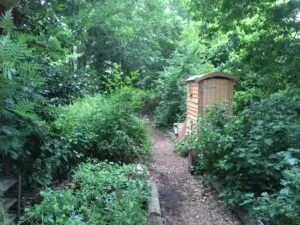
Wishing all a merry winter solstice! Thank you to all our volunteers who have worked so hard to make this garden an abundant, welcoming and diverse place to be. From the 21st December we are taking a short festive break over the holiday period, and giving the garden over to the wild creatures of Finsbury Park. We will be back in the garden as usual, on Sunday January 14th, setting our intentions, putting our hands to the Earth in the New Year. We hope you will come and join us. Please bring a snack and a drink, some sturdy boots and your fine selves.
Salad Dressings – Are They Really Vegan?! – December 2023
As we head into the new year, a time of possibility and reflection. Spending time in the forest garden gives us the opportunity to try out new foods and new recipes, share our home grown favourites with others and be experimental.
Anecdotal stories from friends can often surprise us. While sprinkling olive oil on our garden sourced greens, or coconut milk on our forest fruit salads, for example.
It is a sad truth, that for many years now, millions of migrating birds are killed annually, and knowingly, when caught up in olive harvesting systems. These machines act like hoovers, literally sucking up the birds as they sleep. It is thought that harvesting at night time improves flavour. This is a large scale tragedy for the global ecology. Thankfully, it is possible to source from ethical producers. Ethical Consumer offers a list of brands to avoid, and a list of responsible alternatives, for example Zaytoun, Biona and Suma. These brands reliably avoid harmful farming methods. It is also possible to buy more sustainable oils such as hemp, flaxseed and walnut. Plus more widely available oils such as canola, vegetable, and sunflower oil. For these it is ideal to buy organic, to avoid pesticides.
A very similar caveat exists around the sourcing of coconut oil and coconut milk. Depending on the source, there is hope. According to the International Union for the Conservation of Nature (IUCN), ‘coconut threatens some 18.3 species per million metric tonnes of oil produced, followed by olive – 4.1 species, then palm oil with 3.8.’ Coconut farms in Thailand exploit monkeys as pickers, keeping them chained up, and the coconut farmers are often poorly paid. However please don’t lose hope. If your favourite vegan recipes use coconut oil, and coconut milk, it is absolutely possible to buy from ethical sources (such as Suma, Clearspring, Biona) which ensure good practices. We still feel that palm oil is better avoided at all costs, but that’s another post entirely.
Please continue to research, and share with us your findings! We would love to hear what you have learned and what sources you are trying.
Stag Beetles – November 2023
One of our volunteers recently found two healthy looking grubs in the soil at ELL, near a pile of wood.
What in the earth could they be…? we pondered to ourselves. Well it was quickly confirmed that these are in fact the larvae of London’s much loved stag beetle.
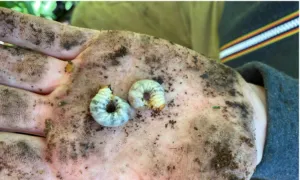
Needless to say, these rare creatures were quickly and carefully returned to the exact same spot as they were found.
If you come across these guys in your garden, it may be because you have a wealthy pile of decaying wood, tucked away somewhere in the corners. These precious wonders of the soil realm are harmless to humans, and to be encouraged.
This autumn ELL volunteers have been putting muddy hands towards creating a new stag beetle loggery, and hugel bed at the site. We have had some rare beetle spottings around our existing loggery, which is encouraging us to learn more about our unusual soil-dwelling friends.
Here are some surprising stag beetle facts. Did you know the grubs can live underground, on a diet of decaying wood, for up to 7 years? Stag beetles are only to be found in the South East of the UK, especially around London. They are Britain’s largest beetle. And can even take flight.
If you would like to make an easy log shelter to share with beetle friends here are some handy tips. However if you would like to create a loggery specifically for stag beetles, then then here is a very good online guide.
Autumn Harvests – October 2023
Our community medlar harvest and tool care day went really well with a bumper Medlar crop. Volunteers took home bags of Medlar to blett and we also had a huge bag which we took to Stroud Green Market to be given away for free to shoppers. We had a tool care session lead by Christopher who taught our community how to sharpen and clean tools. We practiced on our tools, so they feel almost brand new again. Win win!
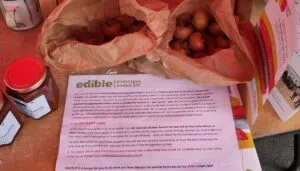
Harvest medlar fruit in late October or November, after they’ve been exposed to frost. They will still be unripe, hard and bitter, so not yet ready for eating. They will rarely ripen on the tree in the UK. Harvest in dry conditions when the stalk parts easily from the tree.
Before eating or cooking medlar fruits, they must be ‘bletted’ or allowed to ripen in storage, to make them soft and sweet. During bletting, the starches turn to sugars, and the acids and tannins decrease – and while this improves the flavour, it also makes the fruits look offputtingly brown and rotten, which may explain why they are no longer widely grown or harvested. But this process is not rotting, it is ripening – the fruits should be sweet, juicy and aromatic.
To blet your medlars, first briefly dip the stalks in a strong salt solution to prevent rotting. Then lay the fruits out on trays or straw in a cool, frost-free place, such as a garage. Make sure they are not touching and their stalks face upward. After two or three weeks, they will become soft, darker brown and slightly wrinkled. Check them regularly and use as soon as they are suitably succulent, sweet and aromatic – the flesh should have the consistency and flavour of dark apple sauce, with hints of dates or apricots. The leathery skin is not edible, so just scoop out the soft flesh and remove the large seeds.
Bletted medlars are traditionally used to make a fragrant, amber-coloured jelly (see below) to complement rich meats and game. They can also be used in sweet desserts, or even eaten uncooked, typically with cheese and port.
Bletted medlars should be used straight away or can be frozen.
Parent and Toddler Sessions – September 2023
We are starting free drop-in sessions for parents and pre-school, Forest Explorers, 10am -12pm, every Wednesday from 20th September. This will take place in the Woodland Area. Guide your child on wild treasure and bug hunts, and make messy mud kitchens!
Please remember to dress for the weather. Parents are responsible for their own children.
If you are interested and would like to know more, the please get in touch.
Late Summer Foraging – August 2023
Nothing to forage in late summer? Not so! we say. The warm weather has brought us out to explore the surrounds.
While planting forest gardens, the value of London’s wild edibles are not forgotten. These rugged, drought and disease resistant gems can be treasures to include in a forage bed, or truly low maintenance forest garden design. Clover is an excellent example and has a number of uses. Edible, pollinator friendly, while also fixing nitrogen. We have included some other easy-to-spot examples –
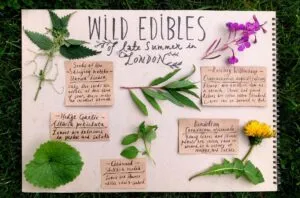
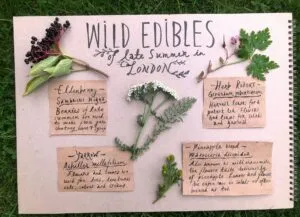
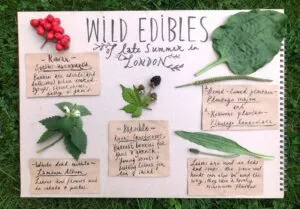
“Those who know and love nature work harder to protect it.” – David Suzuki
Sometimes the most common species are the ones packed with nutrients. We appreciate these partly because they are very hardy. They offer an abundance of uses. Learning about our wild edibles provides us with a profound connection to the ways of our ancestors. It is a first hand interconnection to landscape.
A few words of good forage practice – firstly, be certain of your plant id. Ideally forage away from roadsides. It’s recommended to wash before eating, at least the lower height harvests. When picking from wild spaces, try more abundant plants, and ideally scatter seeds to replenish the landscapes. We never gather more than a tenth of what is visible.
Readers are warmly invited to create your own ‘forage bed’ or planter. And why not dry some wild wonders to keep in jars for the winter? It soon becomes hard to resist that morning blast of herb robert, yarrow or plantain tea. Full of antioxidants, herbs and berries have our bodies glowing and full of energy.
There is plenty of delicious, easy recipes online for each plant.
We love adding rowan berries to colour our steaming pots of autumn chutney. Caveat – rowan berries do need to be cooked ideally, or frozen, before they can be eaten, and are sweeter when harvested in colder months, after a proper frost. But you can always mimic this in late August by putting them in the freezer. We keep some in the freezer through the winter. They are packed full of vitamin C and antioxidants, nutritional powerhouses excellent for boosting the immune system.
Below is a delicious Rosebay Willowherb recipe, a favorite tea from Russia, also with plentiful medicinal benefits.
6 Step recipe – Russian ‘Fireweed Tea’ or ‘Ivan’s Chai‘, with Rosebay Willowherb:
- Sterilise a glass jar in the oven or in boiling water.
- Collect Rosebay Willowherb (aka Fireweed) plant stalks and remove the leaves.
- Roll the leaves between your hands to bruise them.
- Pack them into a glass jar, place in a cool dark place for 2 days to ferment. They will darken slightly in colour.
- Place leaves on baking tray to dry in the oven, 100 deg C. You can also use a food dyhydrator.
- Brew and enjoy your fresh tea! You can keep crispy and well dried leaves in a sealed sterilised jar, for up to a year.
Step Up – Volunteer Centre Hackney – August 2023
We are delighted to welcome a new partnership with the Step Up project, based at Volunteer Centre Hackney. In August we are hosting a new group of volunteers at the garden.
The broad aim of this project is to support people with mental health issues to access volunteering as part of their recovery, and personal journey towards employment. The project recognises that volunteering has many benefits to mental, emotional and social wellbeing, while at the same time, there can be all sorts of barriers towards finding supportive and practical placements.
We greatly enjoyed meeting the group, and received some heartfelt and beautiful feedback from volunteers during their first visit this month. It was a joy to find new friends, learn about new plants together, and how to harvest a delicious forest salad feast in the garden.
Making a compost bay from recycled pallets – July 2023
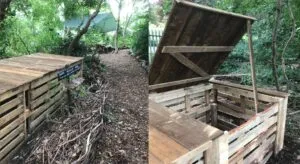
This month we are excited to design and create an enormous new compost bay at ELL, which will double as a worktable, using recycled pallets. All with help from our lovely volunteers. For the roofing, we are using sustainably sourced larch boards on solid hinges. With this design, we will eventually be able to hook up a water harvesting system at the back, by propping up the lids at an angle during rainy months. The design also features removable front panel sections, for easy access. If anyone would like to have a go at creating their own compost bay / carpentry table from recycled pallets, and would like some advice about local resources, please do get in touch!
Take the Mini Pond Challenge! – June 2023
Calling all wildlife lovers! Are you ready for a challenge? The heat is here. And so is the great need for garden water sanctuaries to help our wild friends get through the hotter months. We are calling on everyone to have a go at creating their own MINI POND. To become activists for nature by creating a minature sanctuary for wildlife during the hot dry weather. This can be as simple as putting out a large bowl of water or basin with rocks in it, accessible enough for a hedgehog to have a much-needed drink. Birds and butterflies, frogs and toads will flock to your garden space!
For this purpose it’s possible to simply use an upcycled container, or basin.
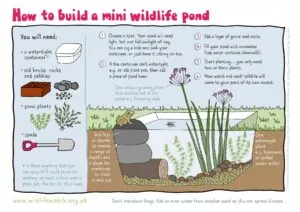
Or if a slightly bigger pond is wanted, it’s advisable to source a pre-formed pond shell or durable rubber liner. There are many sources of information online on how to get started, and videos. Here the wildlife trust offers a simple how-to guide.
Wild City Project, Garden Transformation – March to May 2023
Huge congratulations to Rushmore Primary! We are celebrating the completion of a biodiverse forest garden build with this lively school in East Hackney. The project is part of the Wild City Project, running for a second year, and delivered in partnership with The Salter’s Institute. Each year schools across North London are invited to design their own Forest Gardens, and our team have the pleasure to work with each school in the process to give guidance, during early Spring. The winning design is then lovingly created with the help of students during April and May. Rushmore’s winning design has now come to a magnificent, buzzing, life-filled fruition.
Together we cleared the unused areas, and built a network of pathways, raised beds, a living willow dome and archways, a water feature and bird bath, two seating areas, a minibeast mural, a bug hotel with sedum roof, a large compost bay area, a hammock area, a grape and kiwi pergola, wove a dead hedge and leaf mulch bay, and last but not least, we planted a variety of forest garden beds and beautiful fruit trees. We hope it will inspire many other budding designers to have a go at creating a garden, both younger designers and adults!
Welcoming Suzannah Hall – April 2023
This April we are honoured to welcome Susannah Hall to our team of educators. Susannah will be leading garden education days on specific Sundays, covering useful forest garden skills, during each the four seasons. Upcoming dates include Sunday 30th April, 1st June and 27th August. A further date will soon be confirmed in October. Practical skills we will cover include propagation, general plant knowledge and identification, and forest garden maintenance. If you would like to get involved, Susannah’s other London based permaculture projects include the wonderful London Permaculture Festival, which is coming up this year on the 2nd of July in Camden, and educational opportunities with Permablitz London, featuring regular events across the city.
Launch of New Forest Garden After School Club – April 2023
We are excited to launch our new Forest Garden After School club, for ages 7-11. Sessions run every Tuesday afternoon, from 3:30pm – 5:30pm, in two blocks of six weeks, from April 18th to 11th July. Children will learn through games, play and exploration. We will be learning creatively together in the woodland area, building habitats, and learning about wildlife and forest gardens. Students will learn how to identify native birds and pollinators, get planting, create nature art, woodwork and enjoy storytelling.
If you are interested to join, do get in touch!
Food for the Ecozoic – March 2023
This March we were visited by Deborah from St James’s Church Picadilly. Here they are creating a new project garden in the south facing sun-drenched curtilage area. She came bearing gifts – an envelope of Iron Age horse beans (!) which were readily accepted in return for eleagnus and cardoon.
Already, this community project are growing and promoting sustainable and ancient growing techniques such as The Three Sisters (corn, beans and squash), alongside their new forest garden bed.
‘To many of North America’s First Nations, particularly the Haudenosaunee whose land includes present-day New York City, these three plants were a sacred gift that provided physical and spiritual sustenance. In this system of companion planting, each of the sisters contributes something different. Together, the Three Sisters provide a balanced diet for humans while promoting biodiversity (including pollinators) and enriching the soil for the long term.’
While the three crops in this guild are not perennials, they can be happily grown alongside a forest garden system, and even within one. We will be planting these nitrogen fixing beans in our beds at the next session, which will in turn feed the other plants around them, if left in the soil. We are considering trying the three sisters guild in one of our annual spaces.
The Picadilly-based project will be planting experimentally with polycultures – diversity ranging from from ‘wild’ foods like dog-rose, long-grown plants from these islands such as Celtic bean, as well as foods for a hotter future such as sub-tropical cereals and fruits. If you would like to get involved, please visit their website and get in touch with their Eco team.
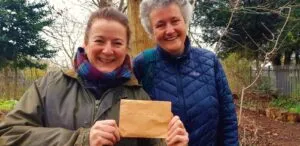
The restless electricity of your minds
needs to be earthed
here, in this patch of soil
glistening dark
in the city’s concrete heart.
receive your envelope of seed-lives;
wonder at this green shoot.’
John Dewey College – February 2023
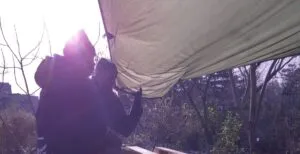
In the coming weeks we will be selecting shade-tolerant plants to populate our pergola area, create new beds and guilds around the site, including new herbal tea areas, shade tolerant trees and fruit bushes. During winter we have built structures including bird houses, insect hotels, and together honed our bushcraft skills to create gifts for friends. We are very much looking forward to the next stage of the journey with John Dewey College, and see what new buds come this Spring!
Rewilding sessions – January 2023
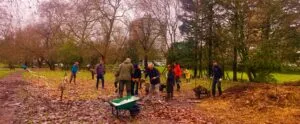
Great turn out today for the first Rewilding session of 2023. Despite the weather and mud, we finished planting part of the new woodland, and expanded the hedge around Edible Landscapes London. This will protect the community garden, improve biodiversity and create a home for wildlife. Thank you to Friends of Finsbury Park, and ELL volunteers who came and braved the wintery elements. For all your muddy bloomin beautiful work!
If you’re keen to get involved, rewilding work takes place on the last Saturday of the month, 10am-1pm. We meet at the cafe next to the lake. Find out more about the Rewilding Group here.
The next dates coming up are :
25 Feb – Tree planting and hedge planting around ELL
25 March – Wildflower areas and planting yellow rattle seeds
Forest Garden Healing Space – April to December 2022
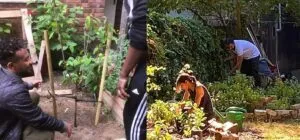
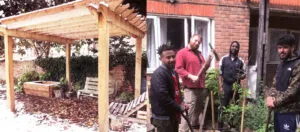
The talented residents of Causeway Housing have been working with our outreach team over Spring and Summer, designing and creating their own beautiful Forest Garden Healing Space. Currently we are completing the raised pond, rain garden and sheltered seating space, within the completed pergola structure. We will continue this work through the Autumn. The materials from this project have been scavenged, donated and funded with support from Groundwork’s Our Space Award. We are very grateful to our partners the Garden of Earthly Delights, who have supported our volunteers and residents to learn to build sturdy benches out of recycled pallets. This will create a much needed, much loved social and educational area. It will enabling residents to meet together within nature, create their own workshops, and cook together outdoors.
Many of the more specialist tools came from the Dalston and Walthamstow Tool Libraries. Materials were gifted from members of Freecycle, and plants donated from local garden centres such as Boma. Thank you! It’s extraordinary what can be achieved on a minimal budget.
If you would like to get involved in this project, learn skills in forest garden design, carpentry, and rainwater harvesting, please do get in touch!
Wild City Project – May to July 2022
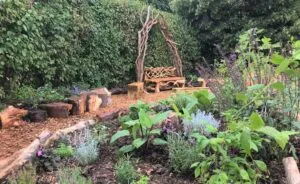
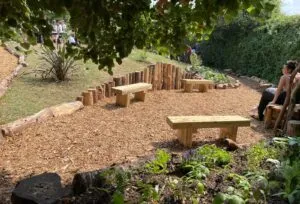
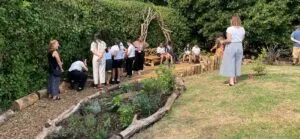
Giant congratulations to Wilbury Primary! We are celebrating the completion of the first stage of our forest garden build with this lively school in Tottenham. The build is part of The Salters Institute’s Wild City Project. Wilbury’s winning design came to a magnificent, buzzing, life-filled fruition in July. We hope it will inspire many other budding designers to have a go at creating a garden, both younger designers and adults.
Process
We worked with four different local schools over summer, which was a joyful process. We witnessed talents emerging, with many cherry-bud ideas. Each class took what they’d learned about forest gardening and put it into practice, by designing a garden space for their school. Each a wonderful story, cultivating inspiration for things yet to take shape. The panel then chose a winning design, that would soon come to life.
A garden blooming with life
Where there was once only compacted grass, (and with the dry weather, this was very compacted), the Wilbury students and garden team manifested a new garden and educational space from scratch. The garden was based on students’ original designs, layouts and moodboards. Together we completed five beds with edible and useful perennials, seating, paths, a shady water feature and bird bath area. Habitats with plentiful log piles emerged, and a secret ‘forest school space’, complete with toadstool seating. Six edible and robust trees were planted with care. We added mycorrhizal fungi to the roots of the trees to help them establish. Lastly, and very importantly, we mulched with barkchip, in preparation for a hot summer to come.
A practical meditation you can try at home
As a group we wrote down our intentions for the space and coming years, and then placed these pieces of paper in the roots of the trees as we planted them. This is a simple ceremony you can try at home. Gifting a tree to the land reconnects us and roots us in our actions. Perhaps you know someone who you would like to give a gift to? A new small tree within your own garden, a community space, or to a much loved friend’s garden. Trees on dwarfing rootstocks need a much smaller space, a sunny space is usually best for fruit. Autumn is actually the ideal time for planting, when the tree is dormant. Planting a tree is immensely rewarding, and can be a good way to start a small backyard forest garden.
What next?
Support for this school project is ongoing. A lectern is being added for the September term to enhance the outdoor classroom. ELL’s outreach team will look forward to working further with the students as the garden evolves.
If you have ideas for your own forest garden project but aren’t sure where to start, please feel free to get in touch and one of our team will try to get back to you.
Spring is springing up – April 2022
We have been dancing in the mulch – our new raised bed area is nearing completion! This Spring the forest garden and wildlife area has been sprouting with blossoms and filled with the buzzing of pollinators. Our beehouse team has been creating safe spaces for swarms of wild honey bees around the park. We have enjoyed hosting a number of schools and new community groups, for nature connection activities and forest garden events.

Wintery happenings – January 2022
Wild City Project
We are excited to announce that this year we will be working with Salters’ Institute on the Wild City project.
It’s a competition for year 5 students to learn more about biodiversity, sustainable food growing and garden design. The winning school will get a forest garden/planters in their playground, which we will then help them to create.
You can learn more here. Why not enter your school?
Tree Planting
We have 3 tree planting days in Finsbury Park in partnership with The Friends of Finsbury Park. We will also be restoring nature in Finsbury Park with community hedge planting days. Gathering over three Saturdays to plant a hedge of mixed native plants such as Hawthorn, Blackthorn, Dog Rose, along the northern perimeter. Get those wellies and gloves on!
Dates are Saturday 15th Jan, Saturday 26th Feb, Saturday 19th March
10am-1pm.
Meet at the central cafe by the lake.
We need between 10-20 people each day, so please bring your friends. Insects and birds are going to love these native mixed hedges and trees. We look forward to working with you to help other species flourish in our park!
Guest blog – October 2021
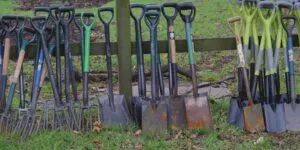
On Sunday we had the pleasure to welcome a new volunteer, Rupert Hughes, who writes In a Green Shade. Rupert offered to share with us his first experience in the garden:

New Tuesday sessions starting – September 2021
By popular demand, we’ll be starting to open our gates for new Tuesday Sessions, running from 10am to 4pm, starting at the beginning of September.
We’ll be adding focus on creating space for mental and physical wellbeing activities, outdoor play, foraging healthy treats, and skillshares. We’ll also be looking at how to create new wildlife habitats around the site, and within Finsbury Park.
Plus having a lot of fun in the process!

New addition to the Edible Landscapes Family – July 2021
Warm welcome to Bethany Anderson! who joins us as ELL’s new Project Coordinator. We are very excited to have her on board. Bethany is part of local Guerrilla Gardening group Guardians of the Green, as well as being a Trustee for the Friends of Finsbury Park. She is currently studying Community Orchardry. As part of GOG, she organises family gardening days and volunteer sessions. With FOFP Bethany is leading the fundraising campaign to build a bigger skatepark, recently organising a Skateathon and Jam. In her new role with Edible Landscapes, Bethany will be working with the team to outreach to schools and community groups, create a new volunteer day on Tuesdays from September, while getting more plants out to local community groups. In a variety of ways, spreading the news and benefits of Forest Gardening. We are greatly looking forward to the days ahead, and working together!

We’re hiring! – June 2021
We are recruiting a Project Coordinator.
Edible Landscapes London are looking for a knowledgeable and motivated individual with the experience, passion and drive to share forest gardening skills throughout our community. We are seeking someone who can think strategically and work together with us, our networks and partners, to reach more people and establish forest gardens in more places.
For details please see the Project Coordinator Job Description.
Please provide a CV and a covering letter explaining why you feel you’re appropriate for the role, how you meet the person specification detailed in the job description and why you want to provide Project Coordinator services for Edible Landscapes London CIC.
Deadline for applications: 8pm Sunday 20 June 2021
Post commences: Mid July 2021
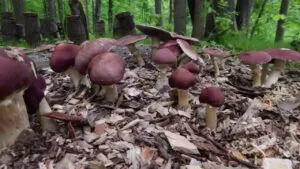
Mushroom beds and tree nurseries – May 2021
This month we had the pleasure to remove the tree guards from the new Tree Nursery Project in Wray Crescent Park. It was created by the wonderful Friends of Wray, who have now reopened their doors. It will provide a three-year home for native saplings with abundant fruits. Robust trees edible for the benefit of both wildlife and humans, including crab apple, rowan, hazel, dog rose and blackthorn.
At the end of the month, we’ll be creating a king stropharia (aka wine cap) mushroom bed, in a shady forest area of the park. In coming months, volunteers are transforming a South-facing area of the park for heat-loving spices, and exotic edibles. Also creating an area for medicinal herbs. Friends of Wray host a vibrant community garden with an established orchard, mini forest garden and growing area.


Breathmark – April 2021
Our love of forest gardening has been transformed into an interactive recorded artwork. In April, we were visited by a group of sound artists, from the MA Curating Contemporary Art Programme, RCA. They are curating an exhibition at Furtherfield gallery in Finsbury Park this summer, part of the People’s Plinth project. We are thrilled to be heard on this platform within a range of community voices. If you’d like to hear it, you can access using a mobile phone from outside the gallery, or from a computer. You can visit the People’s Plinth directly, through the gallery link, and a short list of artworks is available here. Among others, it includes a great interview with Jo, with subjects ranging from nepal pepper pesto, to an introduction to forest gardening. Kevin’s delicious nettles risotto recipe, using five fresh ingredients from Edible Landscapes, features: nettles, babington’s leek, saltbush, three-cornered leek, topped off with alkanet flowers.

The invitation at Furtherfield –
‘We are just animals, humans, and machines getting on together in specific lifeworlds’
A site specific, interactive sound work creating moments of connection between strangers of all species.
Follow this sound work as it leads you across the park to meeting points for animals, plants and strangers. As you listen, consider the needs of all these inhabitants and our symbiotic relationship that is increasingly under threat. Between heartbeats, vibrations and the alignment of crossing paths, this work sounds out a shared existence, putting these moments of connectivity with strangers of all species on the People’s Park’s Plinth.
In this first artwork for the People’s Park Plinth on display during the summer of 2021, one pathway ‘Close to the ground’ is operational. If this work is selected in a public vote in August 2021, further pathways and interactivity will be developed.
The work features interviews with volunteers at Edible Landscapes: David Berrie, Imogen Simmonds, Jo Homan, Juliette Ezavin and Theo Betts
Somerset Adventures – March 2021
Field trips are in the Spring winds. We are delighted to be working with Osprey Outdoors, who are designing a large new forest garden space, having taken on eight disused allotment plots from the council. How could anyone resist? this open yet sheltered, sunlit site, with two ponds, an orchard hosting plentiful wild areas. A wide range of creative projects are in the brew. Workshops will be offered in permaculture and forest gardening. These will happen alongside the traditional crafts and a variety of nature-based skills, which are already in full flow. Osprey create inspiring projects, recognising the benefits of nature immersion for mental health and wellbeing. We look forward to learning together over the next growing seasons, swapping stories, ideas, unusual plants.

One True Voice – February 2022
Forest gardens can allow empowering and symbiotic places for meeting, especially in times of isolation. In February we were honoured to welcome a wonderful group of new friends. ‘One True Voice’ is a local Somali community group supporting women and girls of all ages. We immersed in nature, connecting ourselves and our roots, building our skills, painting the bird houses created using reclaimed wood and bark. The journey was an exploration of what brings us alive, engaging our creative channels in recognition of the ecology of which we are a part. The result was many artistic homes and nooks for our feathered friends at the garden. These will be mounted around Finsbury Park, finding their place within the wild spaces.


Winter blooms – January 2021
This month we’ve been looking around the garden, listening to birds, sitting in meditation. In silent awe of what’s here, noticing so much evergreen. As a result we decided to dedicate this to flowering beauties inspiring us during a snowy winter lockdown. Quietly providing sustenance for winter pollinators. Much-needed vibrancy!
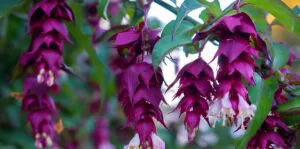
The top photos show loquat and climbing Szechuan pepper, while underneath is a pineapple guava bud and fuchsia, a common garden favourite.
Did you know all fuchsias have edible flowers and berries? Depending on variety, the flavour of the berries ranges greatly. From very sweet, to peppery, to tart like lemons. Similar to kiwi or fig. Some varieties don’t taste of anything. However, we were fortunate enough to have two anonymous varieties donated to us, both delicious. Many cuttings have been born of these plants. This year, we are keen to try Fuchsia procumbens, a trailing species. It has otherworldly flowers and large pink berries.


Wattle Load of Fun – December 2020
To celebrate the lifting of lockdown restrictions and a beautiful and abundant local resource – the clay beneath our feet, ELL hosted a wattle and daub weekend. Children learned how to weave (wattle) using an assortment of hazel, willow and ivy. They also learned how to work with cob (clay, sand and straw) and how to put this all together to make a bird house.
In sessions less than two hours each, our young participants created some amazing structures, some sculpted into birds. We learned about the different birds they might find in their parks and gardens and which ones they wanted to attract into their bird house.
Approx 25 people attended our 7 workshops, over two days. Some went over for a fantastic talk given by our local bee keeper Zhivko. People said the space was ‘magical’ the workshops ‘better than computer games! Despite the cold, waddle load of fun!! Thank you to Cob in the Community for your partnership in this adventure.


New shoots in times of Covid – November 2020
We remain open on Sundays, powering on! Limiting numbers to 6 per session. Please bring your own gloves if you have them, sturdy boots and warm clothes. We’ll be creating a ‘step over’ fence with eight young apple trees, planted around one of our beds, learning propagation techniques with hardwood cuttings, potting up some favourites, and introducing some new species to the garden. These will include colourful wonders like purple tree collards and variagated Taunton Deane kale, propagated in Spring.
We’ll also be following up the soil testing from March, (photo below), starting to look at natural techniques to improve London’s soil quality, by means of mycoremediation and phytoremediation.

Creating a deadwood hedge – October 2020
Thank you to all our wonderful regular volunteers, for creating this beautiful new deadwood hedge at the site. This will become a ‘minibeast metropolis’ of abundant biodiversty, which will in turn feed larger species like hedgehogs and birds. Deadhedges provide shelter for small mammals and birds during bad weather, a place to live and nest. They are sometimes known as ‘windrows’ in the woodland coppice trade, a method to recycle spare branches into functional and beautiful structures onsite. Lots of good information about dead hedges here. We think every forest garden should have one!

Autumn Family Fun – September 2020
What a beautiful event, deep gratitude to all who joined us. An extraordinary session of lively artists getting stuck into nature. We had a lot of fun! The group made natural prints with leaves and flowers, in an process called Hapa Zome. This is the Japanese art of pounding wet leaves with hammers, which allows the natural dye to seep into cloth and form a print. Meanwhile both kids and adults got stuck into creating some beautiful miniature landscapes, using woven hazel sticks, clay and found objects.

Forest garden oils and medicinal vinegars – August 2020
We’ve been creating delicious concoctions of herb vinegars and oils from the garden, and getting experimental with spice. So far we have introduced these as relaxed drop in sessions and conversations for visitors to the garden, and will be doing more outreach around this in Spring. Why not come by and collect some ingredients from the garden to make your own? You can even add flowers like nasturtium or chives. We will be experimenting further with vinegars, tinctures and herbal infusions in months to come. For culinary purposes, we found one favourite ingredient is Nepalese pepper. Once added, the colour of the vinegar turns pink, deeply infusing the flavour of this electric spice. It tastes like grapefruit. We like to use apple cider vinegar with the mother, for the natural health benefits of this loving elixir.

Pergola build – July 2020
We are celebrating the completion of our new pergola entrance! Thank you to all the lovely crew, joining us this month to finish off the build with some roundwood beds, for climbers and shrubs. (A photo of the fully finished entrance can be seen in the ‘Finding Us’ section.) This construction was designed from scratch, by one of our talented volunteers. Most of the wood was cut and measured by hand, by the members who came to the sessions. We think it’s looking rather splendid…

Glorious Cardoon – June 2020
This is the ELL Community bed in Finsbury Park, post cardoon haircut. Who doesn’t love a manificent cardoon? Despite their striking appearance, few people realise how tastey they can be. What to do with a cardoon? Well the list is long. These giant creatures lend themselves to many culinary treats: bagna cauda (a traditional Piedmont dish of barely blanched cardoon stalks served with a garlicky dipping sauce), stews, casseroles, stir fries. Unlike artichokes, it’s not the blossoms we’re after, but the stalks. Their delicate artichoke-like flavor is as refined as it is addictive.

ELL Spring tour – April 2020
Take a look at our beautiful site this spring. There are flowers, fruitlets, young leaves and even some relaxed ducks. An introduction to around 30 of our 200 edible, medicinal and dye plants.
Worm counts at 3 locations – January 2020
Exciting video showing the results of worm counts we started to carry out at Edible Landscapes London in Finsbury Park, January 2020. Worms are excellent indicators of soil health. We aim to do more next winter, when the plants are dormant, and don’t mind new neighbours being planted (with holes dug to do this). But for now, we feel this confirms how much worms dislike compaction. And have taken a great warmth to our raspberry patch…