THE FOREST GARDEN & PLANTS
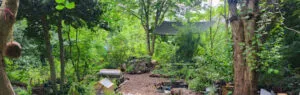
Above: our forest garden site in Finsbury Park
What is a forest garden?
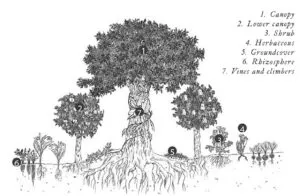
Above: The Seven Layers of a Forest Garden. Image Sheryn Dean
Forest gardens are inspired by the ecosystems at a woodland edge. These low-maintenance, multi-layered perennial gardens are designed for growing food, habitat and materials, for humans and other species, in harmony with nature.
The design of these systems allows a diversity of species to thrive together, with enough space, light and resources for all. The number of layers will vary from garden to garden, but usually there are seven. Plants will occupy different space within these layers, minimising competition, and maximising yield. Each plant has benefits to offer the ecosystem as a whole. A no-waste circular system.
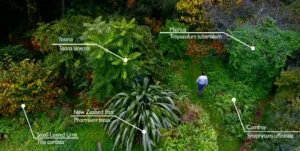
Above: Martin Crawford’s forest garden in Devon. photo credit Agroforestry Research Trust
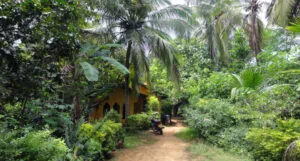
Above: A Kandyan home garden in Sri Lanka
Recognising the Indigenous origins of forest gardens
Forest gardens, also known as food forests, have existed for thousands of years, rooted in the traditional practices of indigenous growers throughout the world. Food forests go by a multitude of different names depending on location. In Kerala and Nepal they are simply known as home gardens. In Sri Lanka they are Kandyan gardens, and huertos familiares or ‘family gardens’ in Mexico. In the 1980s, Robert Hart adapted this knowledge more specifically for temperate climates through his research, experiments and writing. He pioneered the term forest gardening.
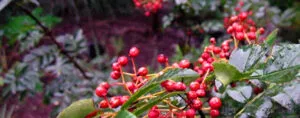
Above: Zanthoxylum alatum or Nepal pepper. Prized in Himalayan cooking for its citrusy grapefruit-lemon flavour, and tongue-tingling sensation. A favourite at our garden.
What are the benefits?
‘All life’s problems can be solved in a garden’. In a nutshell, Forest Gardens provide:
- beautiful havens for both wildlife and people
- sources of local organic produce
- increased biodiversity and ecosystem health
- mitigation of floods, erosion and pollution
- effective carbon sequestration
- a circular no-waste system
- maximum crop yield with minimum effort
- effective carbon sequestration
- engaging outdoor learning environments for community education
- resilience to extreme weather
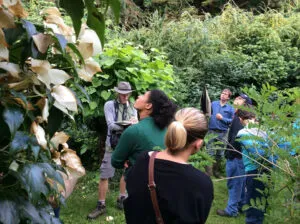
Above: Martin Crawford’s Forest Garden in Devon, photo taken on one of our forest garden course field trips.
What to expect at the garden
We grow over 200 different types of plant at ELL. You can get a sense of how the garden comes to life during spring, in this video tour.
Inside the gate, our site features a relatively mature forest garden planted in 2010, a natural dye garden, a pond area, mushroom area, and a wild habitat area. On the outside of the gates, we tend to an orchard, a nut grove, community forest garden bed and wildflower area, all within the park. Our session leaders enjoy supporting visitors to learn through garden tours, and the botanical names of the plants can be found on signage. Visitors are most welcome to come and have a browse. If you are interested in getting involved in the dye garden, please contact Anne, or visit our Education & Research page.
One of our aims at the forest garden is to propagate plants to give away to local community projects. These plants are also available to the public in return for donations. The forest garden is full of unusual perennials, a ‘mother’ bed, from which volunteers and visitors can take cuttings and save seeds.
Why use perennials?
With increasing awareness of biodiversity loss and deforestation, driven by modern farming, many of us are now looking towards earth-focused methods of food production. Locally grown, healthy sources of food, free. Perennial systems effectivekl restore biodiversity. The soil remains protected, conserving water and nutrients. No sprays or chemicals. These systems are inherently low-maintenance, stronger and more resilient to extreme weather, while perennials provide habitat for wildlife. Organic soil volumes naturally increase year on year, into the future.
Resources for Inspiration
Our choice of botanicals is inspired by the work of Martin Crawford, who runs the Agroforestry Research Trust. If you are looking for a supplier of plants, this is a good place to start. We find that Martin Crawford’s range of books on forest gardens are well laid out and informative.
For detailed information on permaculture plants, we recommend Plants For a Future. An invaluable free database of reference.
If possible, find a local forest garden project near you, and meet the plants in person. Bear in mind, visiting a garden in spring and summer will be a very different experience than in winter. Online video tours can provide an excellent source of inspiration to get started.
Edible Salads at the Garden
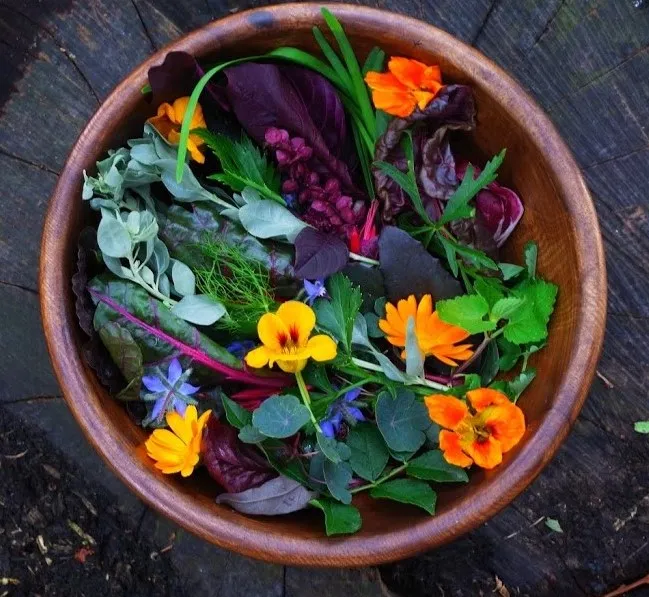
- Bulk: musk mallow (Malva moschata) – leaves; saltbush (Atriplex halimus) – leaves; Caucasian spinach (Hablitzia tamnoides) – leaves; lime (Tilia spp) – young leaves
- Fire: nasturtium (Tropaeolum majus) – leaves, seeds and flowers; chives (Allium schoenoprasum) – leaves and flowers; giant red mustard (Brassica juncea) – leaves and flowers; horseradish (Armoracia rusticana) – leaves; perennial rocket (Diplotaxis tenuifolia) – leaves and flowers
- Colour: calendula (Calendula officials) – flower; day lily (Hemerocallis fulva) – flowers; violet (Viola spp) – flowers; borage (Borago officinalis) – flowers; nasturtium (Tropaeolum minor) – flowers and leaves; false shamrock (Oxalis trilangularis) – leaves; Judas tree (Cercis siliquastrum) – flowers
- Flavour: sweet cicely (Myrrhis odorata) – leaves and stems; french sorrel (Rumex scutatus) – leaves; lovage (Levisticum officinale); fennel (Foeniculum vulgare) – leaves and stems; hyssop (Hyssopus officinalis) – leaves; oregano (Origanum vulgare) – leaves and flowers
Choosing your plants
If you are wondering how to get started, please feel free to come and have a look the forest garden plants here at ELL. When we create a forest garden plant guild, we like to include species with beneficial attributes that compliment each other, and support the whole system. These commonly include species that are:
- Nitrogen fixers
- Mineral accumulators
- Pollinator plants
- Productive edibles
- Evergreens
- Drought resistant
- Pest repellent
You may wish to include plants with specific uses, such as:
- Structural plants for weaving, plant support canes and building
- Windbreaks
- Natural Dye
- Medicinal
- Multisensory
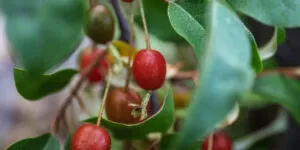
Above: The goumi berry, Elaeagnus multiflora. A nitrogen fixing, shade-tolerant shrub, with delicious edible berries and medicinal benefits.
Plants for a changing climate
Many of our forest garden plants are drought tolerant, and very easy to grow. You are welcome to come and take a cutting. Many of these plants can also be found in garden centres, including fig, bay, grape, mahonia, sedum and yarrow. Mediterranean herbs such as rosemary, thyme and sage. Hardy flowers such as calendula will bloom in all seasons. Lavender, catmint and salvia are excellent for pollinators. Many less common species can be found either online, through us, or through other local permaculture growers. These include salt bush, autumn olive, saskatoon, juniper, pomegranate, persimmon, goumi, and service tree. All of these species grow well here in London.
If you would like to share your explorations in this area, please do get in touch. We have highlighted some more garden favourites below. These species are good all-rounders, and very easy to grow.
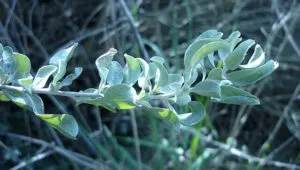
Above: The saltbush, Atriplex halimus. A beautiful hardy perennial for salads. Provides evergreen habitat, windbreak shelter, and is tolerant to drought.
Spotlight Plants:
1. Drought Tolerance
- Hylotelephium spectibile
Common names include sedum, iceplant and butterfly stonecrop. This is one of our favourites at ELL, commonly available in local garden centres. The fresh, slightly lemony, succulent leaves add a delicious crunch to salads. Perfect for scooping hummus and dips. The flowers provide a fantastic late-season food source for pollinators, attracting a wide range of insects like bees, moths, butterflies and hoverflies. It is easy to propagate ice plant, to share with neighbours. Varieties come in a spectrum of colours. The stems are herbaceous, quickly returning in Spring.
- Atriplex halimus
Saltbush grows as a large woody shrub, another favourite for our salads. The foliage has a silvery blue tinge, and as the name suggests, it has a slightly salty taste. Able to grow in dry areas affected by salination, and windy coastal areas, they will actively take up salt from the earth. They are often planted to provide wind break shelter and erosion control. The leaves are evergreen, providing foliage and cover in winter. Stems are very easy to propagate. Ideal for a spot that receives sunlight.
2. Productive Edibles
- Zanthoxylum alatum
Nepal pepper, also known as Timur, is a spicy gem, and one of our biggest Autumn harvests. Many visitors come to collect the zingy peppercorns, which can be added to stews and stir fries, ground up fresh, or used to flavour bottles of oil and vinegar. Earlier in the season, the tree is full of fresh and flavourful leaves to eat cooked or raw. Another drought tolerant species. Fruits are used in traditional medicine for a wide range of health benefits. Loaded with anti-oxidants, the berries are anti-inflammatory and antimicrobial, providing pain relief and aiding digestion.
- Mespilus germanica
Medlar is a beautiful and abundant tree, resistant to disease, and low maintenance. Don’t let the name put you off. Once ripe, fruit tastes of toffee apples with hints of apricot and date. Medlar fruits are usually harvested around late October, then eaten once bletted, left to soften and turn dark brown in colour. At this stage they are eaten raw or prepared into a variety of deserts. Packed with vitamin C, fibre potassium and antioxidants. The tree is often chosen for ornamental value, with large dense deep green leaves, and a flourish of flowers for the pollinators in Spring. They can tolerant some drought, depending on the rootstock.
- Rubus idaeus
Raspberries are easy to grow, the fruits are prolific. Abundant leaves make an excellent medicinal tea, anti-inflammatory, anti-oxidant and good for cramps. The fruits boost the immune system, improve cardio health, and contain powerful antioxidants. Raspberry plants are robust and shade tolerant. Easy to propagate, they send out suckers of new canes each spring. There are over two hundred varieties, in a multitude of colours. We recommend golden raspberries, and at the site we propagate autumn raspberries, for a prolonged harvest into early winter.
3. Winter Pollinators
- Mahonia x media ‘Winter Sun’
Mahonia ‘Winter Sun’ is aptly named. This large, hardy evergreen shrub flowers fragrantly right through the winter, from November to March. It puts on a blaze of colour just when the active winter bees and pollinators need it the most, particularly bumble bees. Also known as Oregon grape, as this flowering period is followed by zesty bunches of deep blue/purple berries, edible to wildlife and humans, during the summer. Drought tolerant, once established. Valued in herbalism for its bitter compounds. Used medicinally for skin, liver and digestive support.
- Hamamelis spp.
Witch hazel provides an important source of pollen in winter. These hardy shrubs offer a vital ‘off-season’ banquet, supporting bees, wasps, moths flies and gnats. Shivering flies and moths are frequent pollinators in cooler weather. The motion of shivering generates heat for their winter activity. Witch hazel offers a vibrant array of flower colours to choose from. One variety, Chinese witch hazel, is evergreen, with deep burgundy or green leaves. Witch hazel has medicinal uses, leaves are used in teas to aid digestion. The plant is an astringent with anti-inflammatory and antiviral properties, balms are used to treat bruises and skin issues, soothing everything from sunburn to insect bites. Compounds are extracted from the leaves, bark and twigs.
4. Nitrogen Fixers
- Eleagnus umbellata
Autumn olive is a large fruiting shrub that provides the garden with many gifts. Not only its ability to fix atmospheric nitrogen, but offering plentiful berries for wildlife and humans. Easier to grow than its cousin, goumi, the fruits are slightly smaller and more tart. The flowers are fragrant with a warm spice aroma. This hardy plant is a trouper; it can tolerate drought, a wide variety of soil conditions, exposure to winds, cold temperatures, and is commonly used for its ability to restore degraded land. The berries are full of antioxidants. Medical uses include their ability to reduce inflammation and lower cholesterol, benefitting heart health.
- Hyppophae rhamnoides
Sea buckthorn has many important uses, forming a symbiotic relationship with Frankia bacteria, this shrub is valuable in forest gardens as a nitrogen fixer. The roots are extensive, used for preventing erosion and anchoring soil on slopes, and sand dunes. Also used as a windbreak. Its dense thorny growth provides superb nesting habitat for birds, and flowers for pollinators. The highly valued, bright orange berries, called ‘sea berries’, are considered a superfood, for animals and humans. Packed with vitamins and rare omega-7 fatty acids. Uses medicinally to support skin health, heart health, aid digestion and immunity. Topically, lotions are applied to skin and hair, and used for wound healing. Unless the variety you buy is self-fertile, you’ll need a male and a female to produce fruit.
5. Mineral Accumulators
- Symphytum officinale
Comfrey is a common addition in permaculture gardens, for good reason. The flowers are loved by the bees and hoverflies. This plant has traditionally been used for medicinal purposes, known as ‘knitbone’, applied topically for sprains, bruises and fractures. Cell-regenerating and anti-inflammatory. The leaves make an excellent natural fertiliser and mulch, when used in a ‘chop and drop’ system. They are packed with nitrogen, phosphorus and potassium. The long tap roots serve as a mineral accumulator. We recommend the variety Bocking 14 if you do not wish it to self-seed.
- Taraxacum officinale
Dandelion deserves its place in any forest garden, as a perennial worth celebrating. Commonly known as a garden ‘weed’, in fact this beauty brings an astonishing number of benefits to the garden. The deep roots break up soil, accumulating and cycling nutrients. All parts of the plant are edible and nutritious; flowers, leaves and roots. They are used medicinally for digestion and liver support, and as a diuretic. The roots make a delicious local alternative to coffee when roasted. Extremely tough and drought resistant. The flowers will provide pollinators with a rich source of nectar and pollen, from early spring to late autumn.
6. Evergreens
- Ugni molinae
Chilean guava is another forest garden favourite, especially suitable for warmer regions of the UK. The berry is said to have been Queen Victoria’s favourite fruit. It is low maintenance, relatively drought-tolerant once established. Generally pest and disease-free. Its compact and evergreen growth habit makes it an ideal understory or shrub layer, an excellent shelter for invertebrates. The flowers are rich in nectar and pollen, and the berries can stay on the bush until early winter, a food source for birds and small mammals. Traditionally Chilean guava has been used to support digestion. Plants in the ugni genus are anti-inflammatory and anti-microbial.
- Lavandula augustifolia
English lavender, a beautiful fragrant plant with a misleading name, as it originates from the mountains of the Mediteranean. It was once widely used as perfume by English royals. For this reason, it also works well in a sensory garden, and the flowers are superb for pollinators. Useful in natural soaps, candles and aromatherapy. Drought-tolerant. Medicinally, lavender is known for its calming, sedative effects, improving sleep. Lavender can be used to relieve pain and cramps, anti-inflammatory, antiseptic and antimicrobial. Edible and delicious when added to chocolate and tea. A little goes a long way.
7. Natural Dye Plants
- Rubia tinctorium
Madder, also known as dyers madder, is a long-lived evergreen perennial of the family Rubiaceae, the same family as coffee. The roots provide a source of long-lasting red dye, for textiles and painting. Madder has been valued in textiles for over five thousand years, originating in Asia and the Mediterranean, to colour wool, cotton, silk, and leather. The hues range from red to orange, burgundy and pink. As habitat, the plant can provide food for the larvae of some Lepidoptera species, including the hummingbird hawk moth. Yellow star-shaped flowers are produced to the benefit of pollinators. Because of madder’s unruly climbing and spreading habit, the roots should be contained to prevent vigorous growth. Medicinally, caution is advised, as the plant contains genotoxic compounds.
- Persicaria tinctoria
Japanese indigo, aka dyers knotweed, is a species of flowering plant in the buckwheat/knotweed family. Used for creating an exquisite, deep-blue dye, derived from the leaves. In the UK, this plant is grown as an annual, from seed to flower in one season. In tropical climates, as a perennial. Japanese indigo prefers to grow in wet soil. Easy to propagate from cuttings. We would recommend this plant if you are new to dying. At ELL we have had success with a variety of extraction methods. These include fresh leaf extraction (salt rub), a relatively simple process. Also fermentation and hot extraction methods, which give more permanent, deeper colours. Medicinally, Japanese indigo is known for its anti-inflammatory effects. Extracts are often used topically in creams, for the skin.
8. Colourful Flowers
- Calendula officinalis
Pot marigold is an easy to grow, multifaceted plant that bursts with colour on a grey day. Loved by butterflies, bees. A good companion plant, attracting beneficial predators like ladybugs, lacewings and hoverflies. The florets are also edible, and have been used through history to add colour to salads and dishes, in lieu of saffron which is much harder to grow. It got its common name as people used to throw the leaves into a pot as an alternative to spinach. A good all rounder – it will tolerate most soil types, flowers through many months, and provides a variety of medicinal benefits. Traditionally used for skin, often made into an oil or balm. The flower acts to heal wounds, reduce inflammation, and is antimicrobial. Used internally as a tincture for digestion. In folklore, calendula is linked to the sun.
- Leycesteria formosa
Himalayan honeysuckle has beautiful foliage and delicious berries that taste of toffee when fully ripe and black. They are a colourful treat, for the humans too, though berries can be bitter if picked too early. Fruiting from early autumn to December, an excellent alternative to bird feeders during times of avian flu. Covered in fountains of deep purple flower bracts, the flowers are loved by wild bees and butterflies. Often used in ornamental gardens. Easy to grow and adaptable to a wide range of soils and light levels.
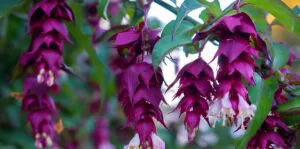
Above: Leycesteria formosa or Himalayan honeysuckle. Hardy, with vivid colours, providing berries and flowers for wildlife in late Autumn and winter.